Laboratory Fixtures: Enhancing Functionality Beyond The Basics
Laboratory Fixtures: Enhancing Functionality Beyond The Basics
Laboratory fixtures do far more than fill space. They shape how well a lab runs each day. When we discuss laboratory fixtures, we are talking about the tools and components that support safe handling, precise work, and long-term durability across research, healthcare, and industrial environments. At PSA Laboratory Furniture, we design and install solutions that help end users work with confidence. Our experience working in commercial, industrial, healthcare, and research labs gives us clear insight into how fixtures influence both performance and safety.
Below, we break down how modern laboratory fixtures strengthen efficiency, protect teams, and support the long-term goals of any lab environment.
The Role Laboratory Fixtures Play in Daily Workflow
Laboratory fixtures guide how people move, think, and work within a space. When sinks, gas outlets, shelving, and worktops sit in the right locations, the entire lab flow feels natural. Tasks shift from one step to the next without unnecessary movement or safety risks. This rhythm matters in labs that run long hours, handle sensitive samples, or complete repetitive testing.
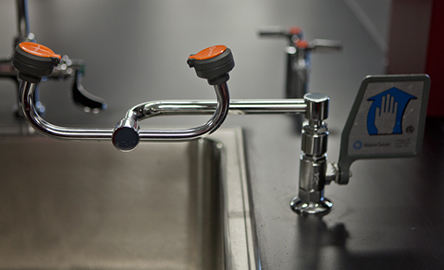
Thoughtful fixture placement keeps the workspace organized. A sink positioned near chemical prep areas limits cross-contamination. Task lighting placed over high-detail work zones improves accuracy. Safety fixtures — such as emergency showers or eyewash stations — must sit within immediate reach so staff can act without hesitation during urgent moments.
When we design and install laboratory cabinetry, fume hood layouts, and countertop configurations, we look closely at how teams use the space. Once the workflow is clear, each fixture supports a purpose rather than filling an empty corner. This planning helps reduce downtime caused by clutter, poor space planning, or unnecessary travel inside the lab.
How the Right Fixtures Strengthen Safety and Compliance
Safety is one of the strongest reasons labs invest in high-quality fixtures. Many incidents in laboratory environments occur because a fixture was placed poorly, lacked durability, or failed under heavy use. When safety fixtures are reliable and easy to access, risk drops sharply.
For example, emergency showers and eyewash units must activate quickly. Gas and vacuum outlets must withstand repeated use without leaks. Sinks, splash guards, and plumbing fixtures must handle corrosive substances. Even the height and placement of shelving affect safety — if staff need to reach awkwardly or stretch over equipment, accidents become more likely.
Good fixtures also support ventilation. Fume extraction connections, snorkels, and related accessories keep hazardous fumes away from the breathing zone. Although fume hoods often get most of the attention, the fixtures around them play a major role in how well the system performs.
At PSA Laboratory Furniture, we take safety goals into account when recommending fixtures. Our focus on durability and layout design helps labs maintain compliance and reduce incidents caused by poor construction or improper placement.
Fixture Materials That Improve Performance and Longevity
Performance in a lab depends heavily on the materials selected for its fixtures. A fixture’s lifespan ties directly to its ability to resist heat, chemicals, moisture, and daily wear. Choosing the right material makes a dramatic difference in how well a lab holds up under constant testing, washing, and handling.
Stainless steel fixtures are favored in environments with strong cleaning protocols. They resist corrosion, stand up to high-temperature sanitization processes, and offer a clean, polished look. Epoxy and polypropylene sinks handle aggressive chemicals and are common in research and educational labs. Heavy-duty metals in gas outlets and plumbing fixtures support high-pressure use without compromising safety.
The materials used in shelving, pegboards, and drying racks must match the demands of the lab as well. Labs that handle glassware all day need drying systems that support a high number of items without bending or breaking. Labs that handle biological samples may prefer antimicrobial finishes.
We work closely with labs to match fixtures with the right materials. This prevents premature wear and helps create a space that stands up to the lab’s daily routine.
The Impact of Specialized Fixtures on Precision and Efficiency
Specialized fixtures help labs perform at a higher level by supporting the exact type of work carried out in the space. For instance, reagent shelving near wet chemistry stations speeds up experiments. Gas manifolds placed at the right height improve access. Overhead service carriers allow labs to reroute utilities without permanent construction.
Lighting is another specialized fixture that plays a significant role in precision. Color-accurate lighting helps researchers see subtle changes in samples. Adjustable task lighting reduces eye strain during detailed work such as microscopy or calibration.
Fixtures that integrate with countertops, such as cup sinks, utility turrets, and reagent shelves, help consolidate workspaces. This keeps tools within reach and cuts down on the time spent moving between stations.
As we work with clients, we look at how specialized fixtures can support the type of research or industrial work performed. Each addition shapes a smoother and more accurate workflow.
Why High-Quality Fixtures Are a Long-Term Investment
Laboratory fixtures influence a lab’s upfront performance and its long-term return on investment. Poorly chosen fixtures lead to frequent replacements, safety hazards, and design limitations that restrict future growth. Upgrading fixtures can also become expensive if the initial design fails to support expansion or changes in workflow.
High-quality fixtures stand up to heavy use, support compliance goals, and make day-to-day work easier. This stability protects a lab’s workflow for years and reduces the chance of costly interruptions.
At PSA Laboratory Furniture, we help clients design spaces that support present and future needs. Our approach blends workflow, durability, and safety so each fixture plays a meaningful role in the lab. Good design saves time, reduces stress, and keeps attention on the work that matters most.